Be coffee-rich in Russia this season
Published on: January 05 2011 14:00 GMT
By Irina Loseva
Coffee is rapidly gaining popularity in Russia. The number of cafes and coffee houses in the cities of the country continues to grow. Coffee houses are currently the most profitable institutions in the area of contemporary catering. They bring no less than 30% revenue, and the demand has only grown over the years. Running a coffee shop has become a profitable business.
Russians are now happy to spend their time in cafes, both for personal and business meetings. Cafes today are not just a segment of the food establishments, but rather a defined subculture and lifestyle.
The degree of relevance of such institutions is testified by the fact that the number of places where people can have a cup of coffee has been increasing over the years. People are willing to save on food, but not a refreshing cup of coffee in the morning. They are ready to pay much more than its cost for a cup of espresso in a coffee shop.
Analysts believe that profit margin of specialized stores exceeds 600%, while the revenue is approximately 30%, which makes a business of this kind very attractive. On average, a regular coffee shop pays for itself in two to three years.
However, those who are planning to open a coffee shop should keep in mind that they would need to try to sell at least one hundred seventy cups a day, and more than five thousand a month. This could be difficult to achieve. Yet, it is necessary to cover the rent expenses and make profit, wrote exrert-coffee.ru
One option of a small business is a coffee shop on wheels. This idea was borrowed from British entrepreneurs. Mobile coffee shops in Russia and Ukraine have quickly found their niche in the market and one can always see a line near a vehicle with a coffee machine.
Usually, the expenses are limited to the parking fees, purchasing of a coffee machine and products. Mobile coffee houses are often completely autonomous and do not need electricity and water, said Invest Gazeta.
Coffee vending machines are also considered a profitable vending business. In practice, the machines still require attention which involves careful selection of technology, search for appropriate location and maintenance issues.
Nevertheless coffee vending machines operate without a license and a selling assistant, do not require daily inspection and, if the location is good, generate steady income and pay off within six months to two years.
According to experts, to turn the vending business into a full-on operation, one needs to build a chain of at least four machines, simultaneously providing natural and instant coffee and properly locating them in profitable areas - schools, service stations, hair salons, office and shopping centers, airports and train stations. Ideally, there would be a power socket near a coffee vending machine, and even better if there are sofas or chairs.
The range of drinks is chosen depending on the location of the machine and the target audience. In offices and shopping malls, where the client is focused on high quality, the machines that run on natural coffee beans should be located. According to Bishelp.ru, most popular drinks now are coffee (espresso, Americano, cappuccino), tea, hot chocolate and milk.
In general, any of these options can bring fairly good financial results within reasonable time. An illustration of this is the ever-expanding chain of "Chocolate" and "Coffee House." Both companies are actively increasing their presence in other cities across the country, apart from Moscow and St. Petersburg. Coffee houses have become a very profitable business and will in the future bring a lot of money to the owners.
Original Article
Starbucks Backs 2011 Outlook Despite Higher Coffee Prices - Update 8/17/2010 9:48 AM ET
Starbucks Backs 2011 Outlook Despite Higher Coffee Prices - Update
8/17/2010 9:48 AM ET
RELATED NEWS
Starbucks Q1 Profit Soars 43.5%, Tops Estimate; Tightens FY11 Outlook
Starbucks Corp. Is Heading Lower On Forecast
Correction: Starbucks Q1 Profit Soars; Tightens FY11 EPS Outlook - Quick Facts
Starbucks Q1 11 Earnings Conference Call At 5:00 PM ET
Starbucks Launches Mobile Payment In All U.S. Company-operated Stores
(RTTNews) - Specialty coffee retailer Starbucks Corp. (SBUX: News ) on Tuesday reaffirmed its earnings outlook for fiscal year 2011, despite the recent rise in green coffee prices.
The Seattle, Washington-based company reiterated its fiscal 2011 earnings outlook in a range of $1.36-$1.41 per share, which it provided while reporting its financial results for the third quarter in July.
The company expects to absorb about $0.04 per share in additional commodity costs in the year, primarily related to higher coffee prices. Starbucks said it will be able to offset the relatively short-term fluctuations inherent in today's coffee market.
On average, 21 analysts polled by Thomson Reuters expect the company to report earnings of $1.43 per share for fiscal 2011. Analysts' estimates typically exclude special items.
Starbucks had been grappling with weak U.S. sales growth due to slowing traffic and moderating demand amid the economic meltdown. In an effort to live through the recession, the company embarked on several cost-cutting measures, including store closures and job cuts. The company also brought back founder Howard Schultz as CEO to steer it through. In mid-July, Starbucks reported a 37% increase in third-quarter profit, helped by strong same-store sales growth and improved margins. The company's profit for the third quarter was $207.9 million or $0.27 per share, compared to $151.5 million or $0.20 per share for the year-ago quarter. Net revenues for the quarter rose 8.7% to $2.61 billion from $2.40 billion in the prior-year quarter.
At that time, the company said it expects fiscal 2010 non-GAAP earnings in a range of $1.22-$1.23 per share. Analysts expect the company to report earnings of $1.24 per share for the year.
Earlier on Tuesday, Starbucks announced the launch of Starbucks Reserve, a new line of ultra-premium, single-origin coffees, which will be available in select U.S. stores this fall. Beginning August 31, the first offering, Galápagos San Cristóbal will be available for sale.
In Tuesday's regular trading session, SBUX is trading at $24.03, up $0.21 or 0.88% on a volume of 13,178 shares. The stock has been trading in a range of $18.21-$28.50 in the past 52 weeks.
Original Article
8/17/2010 9:48 AM ET
RELATED NEWS
Starbucks Q1 Profit Soars 43.5%, Tops Estimate; Tightens FY11 Outlook
Starbucks Corp. Is Heading Lower On Forecast
Correction: Starbucks Q1 Profit Soars; Tightens FY11 EPS Outlook - Quick Facts
Starbucks Q1 11 Earnings Conference Call At 5:00 PM ET
Starbucks Launches Mobile Payment In All U.S. Company-operated Stores
(RTTNews) - Specialty coffee retailer Starbucks Corp. (SBUX: News ) on Tuesday reaffirmed its earnings outlook for fiscal year 2011, despite the recent rise in green coffee prices.
The Seattle, Washington-based company reiterated its fiscal 2011 earnings outlook in a range of $1.36-$1.41 per share, which it provided while reporting its financial results for the third quarter in July.
The company expects to absorb about $0.04 per share in additional commodity costs in the year, primarily related to higher coffee prices. Starbucks said it will be able to offset the relatively short-term fluctuations inherent in today's coffee market.
On average, 21 analysts polled by Thomson Reuters expect the company to report earnings of $1.43 per share for fiscal 2011. Analysts' estimates typically exclude special items.
Starbucks had been grappling with weak U.S. sales growth due to slowing traffic and moderating demand amid the economic meltdown. In an effort to live through the recession, the company embarked on several cost-cutting measures, including store closures and job cuts. The company also brought back founder Howard Schultz as CEO to steer it through. In mid-July, Starbucks reported a 37% increase in third-quarter profit, helped by strong same-store sales growth and improved margins. The company's profit for the third quarter was $207.9 million or $0.27 per share, compared to $151.5 million or $0.20 per share for the year-ago quarter. Net revenues for the quarter rose 8.7% to $2.61 billion from $2.40 billion in the prior-year quarter.
At that time, the company said it expects fiscal 2010 non-GAAP earnings in a range of $1.22-$1.23 per share. Analysts expect the company to report earnings of $1.24 per share for the year.
Earlier on Tuesday, Starbucks announced the launch of Starbucks Reserve, a new line of ultra-premium, single-origin coffees, which will be available in select U.S. stores this fall. Beginning August 31, the first offering, Galápagos San Cristóbal will be available for sale.
In Tuesday's regular trading session, SBUX is trading at $24.03, up $0.21 or 0.88% on a volume of 13,178 shares. The stock has been trading in a range of $18.21-$28.50 in the past 52 weeks.
Original Article




Celebrating A Gift From Bali: Delicious Confusion
Original Article

October 8, 2010
Celebrating A Gift From Bali: Delicious Confusion
By MATTHEW GUREWITSCH
NO longer quite the inaccessible Shangri-La of antique travelogue, Bali remains, for artists of all kinds and seekers of a spiritual bent, an isle of pristine enchantments. To musicians with or without the cosmic baggage, the fascination lies in the intricately layered pulse and shimmer of the gamelan, the indigenous form of orchestral ensemble, dominated by percussion and associated for centuries with Balinese ritual and devotion.
Since the 1980s the clarinetist and composer Evan Ziporyn has made the pilgrimage often. His new opera, “A House in Bali,” celebrates his forerunner Colin McPhee, a Canadian-born composer and scholar best remembered by fellow acolytes of Bali’s musical heritage. Happening on a few scratchy phonograph records from Bali in 1929, McPhee found his calling. If not for him, the traditions that flourish today might be extinct.
The opera is based mainly on McPhee’s memoirs of the same title, published in 1946 to a rave review in The New York Times by the anthropologist Margaret Mead, who had known McPhee in Bali. “This book,” Mead wrote, “is not only for those who would turn for a few hours from the jangle of modern life to a world where the wheeling pigeons wear bells on their feet and bamboo whistles on the tail feathers, but also for all those who need reassurance that man may again create a world made gracious and habitable by the arts.”
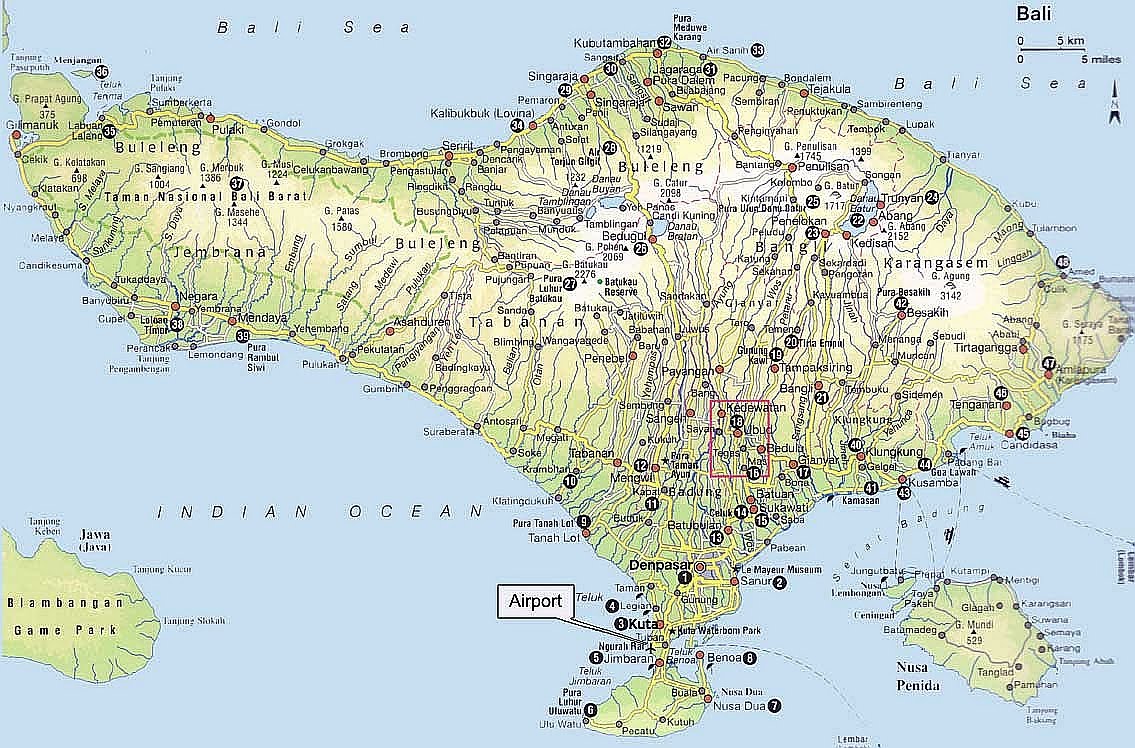
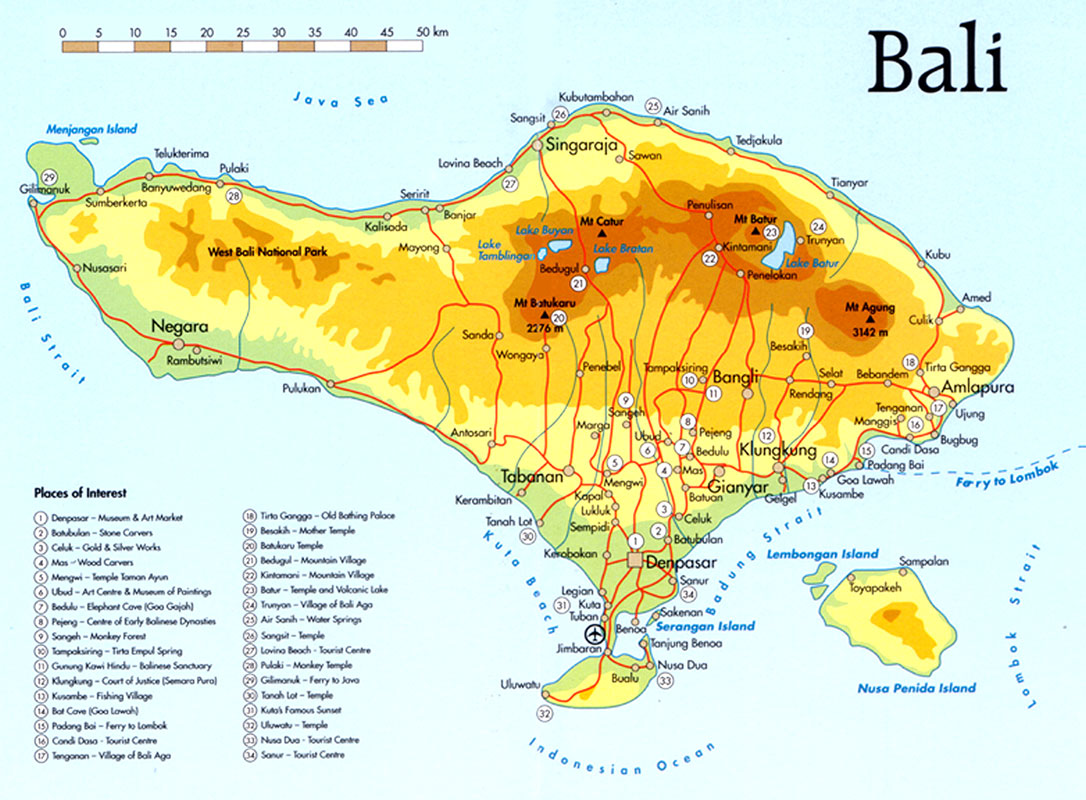
For logistical and sentimental reasons Mr. Ziporyn’s opera received its first, unstaged, preview in June 2009 on the steps of a temple in Ubud, a Balinese arts mecca, surrounded by spreading rice terraces and plunging ravines. The stage premiere followed three months later in Berkeley, Calif. This fall the opera reaches the East Coast, with performances in Boston and in the Brooklyn Academy of Music’s Next Wave Festival Thursday through Saturday.
The scoring is for a balanced ensemble of Western (the Bang on a Can All-Stars, of which Mr. Ziporyn is a founding member) and performers from Bali whose contributions are equal but for long stretches separate. On Oct. 30 a program of Mr. Ziporyn’s compositions in the Making Music series at Zankel Hall will include further examples of Western-Eastern fusion.
Born in Montreal in 1900, McPhee was hardly the first Western composer to thrill to the gamelan. The former Wagnerian Claude Debussy was transfixed by Balinese musicians at the Universal Exposition in Paris in 1889. The cosmopolitan Maurice Ravel was likewise taken. But it was left to McPhee to sail halfway around the globe to experience the music in its home.
For much of the 1930s he made Bali his home, studying, redeeming historic instruments from pawnbrokers, recruiting children to learn and play. He left in 1938, never to return, but worked on his magnum opus, “Music in Bali,” for the rest of his life. He had barely finished correcting the page proofs in the medical center of the University of California, Los Angeles, when he died, in 1964.
In his memoir McPhee’s evocations of gamelan music are bewitchingly specific.
“At first, as I listened from the house,” one passage begins, “the music was simply a delicious confusion, a strangely sensuous and quite unfathomable art, mysteriously aerial, aeolian, filled with joy and radiance. Each night as the music started up, I experienced the same sensation of freedom and indescribable freshness. There was none of the perfume and sultriness of so much music in the East, for there is nothing purer than the bright, clean sound of metal, cool and ringing and dissolving in the air. Nor was it personal and romantic, in the manner of our own effusive music, but rather, sound broken up into beautiful patterns.”
McPhee went on to analyze the music’s layered architecture: the “slow and chantlike” bass, the “fluid, free” melody in the middle register, the “incessant, shimmering arabesques” high in the treble, which ring, in McPhee’s phrase, “as though beaten out on a thousand little anvils.” Add to all this the punctuation of gongs in many registers, the cat’s-paws and throbbings and thunderclaps of the drums, the tiny crash of doll-size cymbals and the “final glitter” of elfin bells, “contributing shrill overtones that were practically inaudible.”
The scales, though pentatonic, fail to duplicate the assortment we know from the black keys of a piano. And pitch variations from gamelan to gamelan (fundamentally irreconcilable with Western tuning) amount to a science in itself.
The narrative of “A House in Bali” makes delightful reading too, despite some extreme air-brushing. McPhee’s wife, Jane Belo, a woman of means and an anthropologist, is never mentioned, though they traveled (and built the house) on her money. Bowing to the taboos of his time, McPhee passes over the awakening of his homosexuality in Bali, though the charged nature of his attachments to numerous men and boys (consummated or otherwise) is hard to miss. Impending war, one factor that drove him from Bali, is hinted at. Crackdowns by the vice squad, another factor, are not.
In shaping the stage action, the librettist Paul Schick picked out several episodes that McPhee’s readers are sure to remember: the long-drawn-out construction of the house, a comic shakedown by his native neighbors, an unsettling call from a suspected Japanese spy, a visitation by spirits of ill omen. Much of the dialogue is straight from the book; most of the rest quotes writings of the opera’s two other Western characters, Mead and the German artist Walter Spies.
As for the staging, audiences who anticipate an ornamental divertissement along the lines of the “Small House of Uncle Thomas” sequence from “The King and I” are in for a surprise. Mr. Ziporyn seems to have been thinking along these lines too, but the director, Jay Scheib, had other ideas.
“McPhee and Mead and Spies were all deeply involved in image making,” Mr. Scheib said recently between rehearsals on an iffy Skype connection from Ubud. Bali. (Signs of the times: Mr. Ziporyn remembers when the closest telephone was an hour away in the capital, Denpasar.)
“Mead was working out the methodology of visual anthropology, based on the scientific premise that you could infer more about a culture through careful photography rather than through written notes,” Mr. Scheib added. “McPhee shot hours of silent film footage of dance training and rehearsals. And Spies was documenting Balinese culture in a very interesting way through painting.”
With all this in mind Mr. Scheib has opted for extensive use of live video, giving audiences virtual eye contact with performers, even when they are confined to enclosed spaces where viewers in the auditorium cannot actually see them. This, at least, was the case in Berkeley; the production was still evolving.
At the heart of the opera, and often front and center, is Sampih, a shy, skittish country urchin who rescues McPhee from a flash flood, becomes a servant in his household and is trained, at McPhee’s urging, as a dancer. In 1952 the real Sampih achieved international stardom touring coast to coast in the United States as well as performing in London. Back home in Bali two years later, at 28, he was strangled under nebulous circumstances by a killer who was never caught.
Though the correspondences are far from exact, McPhee’s infatuation with Sampih has reminded many of Thomas Mann’s “Death in Venice,” in which the elderly, repressed aesthete Gustav von Aschenbach conceives a fatal attraction for Tadzio, an exotic youth. The opera by Benjamin Britten (a close friend of McPhee’s who for a time shared a Brooklyn brownstone with him and other arty types like Leonard Bernstein) reinforces the parallels, such as they are. Not only did Britten assign the role of Tadzio to a dancer; he also scored his music for gamelan.
The part of McPhee in Mr. Ziporyn’s opera was originally sung by Marc Molomot, who was unavailable for the current performances. His replacement is Peter Tantsits, an adventurous high tenor, who has studied the voluminous source material and McPhee’s circle in depth.
“As an opera singer it’s rare to get to play a character who existed in the flesh, and not all that long ago,” Mr. Tantsits said recently from Boston. “My first impression when I was offered the part was, ‘I’m too young to play Aschenbach,’ which is a role I’d love to do maybe in 20 years. Right now I’m 31, the same age as Colin when he went to Bali. I don’t think the relationship with Sampih was a case of sexual attraction but something more like an adoption. The way he’s described in the book is quite sensual. This is hard to talk about. I don’t think we’ve completely decided what we will decide.”
No Pandora, Mr. Ziporyn has deliberately kept a tight seal on the ambiguities.
“As McPhee presents himself in the book, he’s very transparent yet completely opaque,” Mr. Ziporyn said on a recent visit to New York. “I wanted to mirror that. I think of McPhee almost as a Nabokovian unreliable narrator, as in ‘Pale Fire,’ or even ‘Lolita,’ if that’s not too charged an analogy.
“Every quest is a quest for yourself. In going to Bali, McPhee was looking for his own artistic or personal essence. ‘I’ll always be the outsider,’ he said after he’d been there for years. He was talking about the music, he was talking about Sampih, and he was speaking in general. I wanted to convey that sense and let viewers draw their own conclusions.”

October 8, 2010
Celebrating A Gift From Bali: Delicious Confusion
By MATTHEW GUREWITSCH
NO longer quite the inaccessible Shangri-La of antique travelogue, Bali remains, for artists of all kinds and seekers of a spiritual bent, an isle of pristine enchantments. To musicians with or without the cosmic baggage, the fascination lies in the intricately layered pulse and shimmer of the gamelan, the indigenous form of orchestral ensemble, dominated by percussion and associated for centuries with Balinese ritual and devotion.
Since the 1980s the clarinetist and composer Evan Ziporyn has made the pilgrimage often. His new opera, “A House in Bali,” celebrates his forerunner Colin McPhee, a Canadian-born composer and scholar best remembered by fellow acolytes of Bali’s musical heritage. Happening on a few scratchy phonograph records from Bali in 1929, McPhee found his calling. If not for him, the traditions that flourish today might be extinct.
The opera is based mainly on McPhee’s memoirs of the same title, published in 1946 to a rave review in The New York Times by the anthropologist Margaret Mead, who had known McPhee in Bali. “This book,” Mead wrote, “is not only for those who would turn for a few hours from the jangle of modern life to a world where the wheeling pigeons wear bells on their feet and bamboo whistles on the tail feathers, but also for all those who need reassurance that man may again create a world made gracious and habitable by the arts.”
For logistical and sentimental reasons Mr. Ziporyn’s opera received its first, unstaged, preview in June 2009 on the steps of a temple in Ubud, a Balinese arts mecca, surrounded by spreading rice terraces and plunging ravines. The stage premiere followed three months later in Berkeley, Calif. This fall the opera reaches the East Coast, with performances in Boston and in the Brooklyn Academy of Music’s Next Wave Festival Thursday through Saturday.
The scoring is for a balanced ensemble of Western (the Bang on a Can All-Stars, of which Mr. Ziporyn is a founding member) and performers from Bali whose contributions are equal but for long stretches separate. On Oct. 30 a program of Mr. Ziporyn’s compositions in the Making Music series at Zankel Hall will include further examples of Western-Eastern fusion.
Born in Montreal in 1900, McPhee was hardly the first Western composer to thrill to the gamelan. The former Wagnerian Claude Debussy was transfixed by Balinese musicians at the Universal Exposition in Paris in 1889. The cosmopolitan Maurice Ravel was likewise taken. But it was left to McPhee to sail halfway around the globe to experience the music in its home.
For much of the 1930s he made Bali his home, studying, redeeming historic instruments from pawnbrokers, recruiting children to learn and play. He left in 1938, never to return, but worked on his magnum opus, “Music in Bali,” for the rest of his life. He had barely finished correcting the page proofs in the medical center of the University of California, Los Angeles, when he died, in 1964.
In his memoir McPhee’s evocations of gamelan music are bewitchingly specific.
“At first, as I listened from the house,” one passage begins, “the music was simply a delicious confusion, a strangely sensuous and quite unfathomable art, mysteriously aerial, aeolian, filled with joy and radiance. Each night as the music started up, I experienced the same sensation of freedom and indescribable freshness. There was none of the perfume and sultriness of so much music in the East, for there is nothing purer than the bright, clean sound of metal, cool and ringing and dissolving in the air. Nor was it personal and romantic, in the manner of our own effusive music, but rather, sound broken up into beautiful patterns.”
McPhee went on to analyze the music’s layered architecture: the “slow and chantlike” bass, the “fluid, free” melody in the middle register, the “incessant, shimmering arabesques” high in the treble, which ring, in McPhee’s phrase, “as though beaten out on a thousand little anvils.” Add to all this the punctuation of gongs in many registers, the cat’s-paws and throbbings and thunderclaps of the drums, the tiny crash of doll-size cymbals and the “final glitter” of elfin bells, “contributing shrill overtones that were practically inaudible.”
The scales, though pentatonic, fail to duplicate the assortment we know from the black keys of a piano. And pitch variations from gamelan to gamelan (fundamentally irreconcilable with Western tuning) amount to a science in itself.
The narrative of “A House in Bali” makes delightful reading too, despite some extreme air-brushing. McPhee’s wife, Jane Belo, a woman of means and an anthropologist, is never mentioned, though they traveled (and built the house) on her money. Bowing to the taboos of his time, McPhee passes over the awakening of his homosexuality in Bali, though the charged nature of his attachments to numerous men and boys (consummated or otherwise) is hard to miss. Impending war, one factor that drove him from Bali, is hinted at. Crackdowns by the vice squad, another factor, are not.
In shaping the stage action, the librettist Paul Schick picked out several episodes that McPhee’s readers are sure to remember: the long-drawn-out construction of the house, a comic shakedown by his native neighbors, an unsettling call from a suspected Japanese spy, a visitation by spirits of ill omen. Much of the dialogue is straight from the book; most of the rest quotes writings of the opera’s two other Western characters, Mead and the German artist Walter Spies.
As for the staging, audiences who anticipate an ornamental divertissement along the lines of the “Small House of Uncle Thomas” sequence from “The King and I” are in for a surprise. Mr. Ziporyn seems to have been thinking along these lines too, but the director, Jay Scheib, had other ideas.
“McPhee and Mead and Spies were all deeply involved in image making,” Mr. Scheib said recently between rehearsals on an iffy Skype connection from Ubud. Bali. (Signs of the times: Mr. Ziporyn remembers when the closest telephone was an hour away in the capital, Denpasar.)
“Mead was working out the methodology of visual anthropology, based on the scientific premise that you could infer more about a culture through careful photography rather than through written notes,” Mr. Scheib added. “McPhee shot hours of silent film footage of dance training and rehearsals. And Spies was documenting Balinese culture in a very interesting way through painting.”
With all this in mind Mr. Scheib has opted for extensive use of live video, giving audiences virtual eye contact with performers, even when they are confined to enclosed spaces where viewers in the auditorium cannot actually see them. This, at least, was the case in Berkeley; the production was still evolving.
At the heart of the opera, and often front and center, is Sampih, a shy, skittish country urchin who rescues McPhee from a flash flood, becomes a servant in his household and is trained, at McPhee’s urging, as a dancer. In 1952 the real Sampih achieved international stardom touring coast to coast in the United States as well as performing in London. Back home in Bali two years later, at 28, he was strangled under nebulous circumstances by a killer who was never caught.
Though the correspondences are far from exact, McPhee’s infatuation with Sampih has reminded many of Thomas Mann’s “Death in Venice,” in which the elderly, repressed aesthete Gustav von Aschenbach conceives a fatal attraction for Tadzio, an exotic youth. The opera by Benjamin Britten (a close friend of McPhee’s who for a time shared a Brooklyn brownstone with him and other arty types like Leonard Bernstein) reinforces the parallels, such as they are. Not only did Britten assign the role of Tadzio to a dancer; he also scored his music for gamelan.
The part of McPhee in Mr. Ziporyn’s opera was originally sung by Marc Molomot, who was unavailable for the current performances. His replacement is Peter Tantsits, an adventurous high tenor, who has studied the voluminous source material and McPhee’s circle in depth.
“As an opera singer it’s rare to get to play a character who existed in the flesh, and not all that long ago,” Mr. Tantsits said recently from Boston. “My first impression when I was offered the part was, ‘I’m too young to play Aschenbach,’ which is a role I’d love to do maybe in 20 years. Right now I’m 31, the same age as Colin when he went to Bali. I don’t think the relationship with Sampih was a case of sexual attraction but something more like an adoption. The way he’s described in the book is quite sensual. This is hard to talk about. I don’t think we’ve completely decided what we will decide.”
No Pandora, Mr. Ziporyn has deliberately kept a tight seal on the ambiguities.
“As McPhee presents himself in the book, he’s very transparent yet completely opaque,” Mr. Ziporyn said on a recent visit to New York. “I wanted to mirror that. I think of McPhee almost as a Nabokovian unreliable narrator, as in ‘Pale Fire,’ or even ‘Lolita,’ if that’s not too charged an analogy.
“Every quest is a quest for yourself. In going to Bali, McPhee was looking for his own artistic or personal essence. ‘I’ll always be the outsider,’ he said after he’d been there for years. He was talking about the music, he was talking about Sampih, and he was speaking in general. I wanted to convey that sense and let viewers draw their own conclusions.”
Affordable Starbucks brew any time
http://lifestyle.inquirer.net/food/food/view/20101007-296371/Affordable-Starbucks-brew-any-time
A COFFEE craving doesn’t mean a mad dash to the shops anymore. Coffee lovers can now have their favorite drink any time of the day.
Starbucks introduces the Via Ready Brew—instant coffee that comes in stick packets. It’s not the three-in-one kind, though, but basic coffee granules that mimic the exact taste, aroma and flavor of a Starbucks brew.
“Via is made of 100-percent natural roasted Arabica coffee made through the patent-pending Micro Ground Technology, which captures the quality of our whole-bean coffee,” said Cos LaPorta, Starbucks Coffee Asia-Pacific president during the recent launch at 6750, Ayala Avenue, Makati. “It’s free of by-products or chemicals, has the same body and rich flavor, but this time, you just have to add hot water.”
Starbucks Via comes in three variants: Italian Roast, extra bold (red box); Columbia, Medium (orange box); and Italian Roast, decaf (blue box). All are available in packs of three (P130) and box of 12 (P450 for regular, and P470 for decaf). That means you can have coffee for around P50 per cup—much cheaper than ordering a short latté at P90.
Is this a move to make Starbucks coffee more affordable for Filipinos?
It’s an advantage said LaPorta, but Via’s purpose is to make coffee more accessible and available.
“Via’s tagline ‘Never Be Without Great Coffee’ means you can have it even if you are traveling, in the office, on the mountains, on the beach.”
Social activity
Starbucks, a 40-year-old establishment, has 160 stores in the country since it opened it’s first branch in 1997. The Philippines is the third country outside North America to offer Via, which is available in the US, Canada, UK and Japan. Such is the demand for Starbucks products here where coffee is a staple drink and “having coffee” has evolved into a social activity.
Some Starbucks branches held a challenge where customers were given samples of freshly brewed coffee and Via mix.
“They can’t tell the difference,” said Noey Lopez, president of Rustan Coffee Corp., local franchise holder of Starbucks.
Coffee education is also practiced in Starbucks according to LaPorta. Employees undergo a Coffee Masters program where they are trained in all aspects of coffee—kinds, purchasing, food pairings and presentation.
“For example, if someone asks for a low-calorie drink, they offer brewed coffee, non-fat lattés, Café Americano, Frappuccino Light or shaken iced tea,” he added.
Iced Coffee with Milk
¾ cold water
¼ c cold milk
Pour water and milk in a tall glass. Add Starbucks Via Ready Brew and stir. Sweeten to taste and top with ice.
Coffee Soda
1 packet via
1 c sparkling water
Sugar, honey, agave or vanilla syrup
Put Via in tall glass, add small amount of sparkling water, stir to dissolve. Pour in remaining sparkling water, sweeten to taste.
Mocha Malted Milkshake
1 packet Starbucks Via
½ c cold milk
1 c chocolate ice cream
2 tbsp malted milk powder
Blend together and serve.
Caramel Mocha Milkshake
Follow instructions for Mocha Malted Milkshake but substitute vanilla ice cream for chocolate and add caramel sauce instead of malted milk powder.
A COFFEE craving doesn’t mean a mad dash to the shops anymore. Coffee lovers can now have their favorite drink any time of the day.
Starbucks introduces the Via Ready Brew—instant coffee that comes in stick packets. It’s not the three-in-one kind, though, but basic coffee granules that mimic the exact taste, aroma and flavor of a Starbucks brew.
“Via is made of 100-percent natural roasted Arabica coffee made through the patent-pending Micro Ground Technology, which captures the quality of our whole-bean coffee,” said Cos LaPorta, Starbucks Coffee Asia-Pacific president during the recent launch at 6750, Ayala Avenue, Makati. “It’s free of by-products or chemicals, has the same body and rich flavor, but this time, you just have to add hot water.”
Starbucks Via comes in three variants: Italian Roast, extra bold (red box); Columbia, Medium (orange box); and Italian Roast, decaf (blue box). All are available in packs of three (P130) and box of 12 (P450 for regular, and P470 for decaf). That means you can have coffee for around P50 per cup—much cheaper than ordering a short latté at P90.
Is this a move to make Starbucks coffee more affordable for Filipinos?
It’s an advantage said LaPorta, but Via’s purpose is to make coffee more accessible and available.
“Via’s tagline ‘Never Be Without Great Coffee’ means you can have it even if you are traveling, in the office, on the mountains, on the beach.”
Social activity
Starbucks, a 40-year-old establishment, has 160 stores in the country since it opened it’s first branch in 1997. The Philippines is the third country outside North America to offer Via, which is available in the US, Canada, UK and Japan. Such is the demand for Starbucks products here where coffee is a staple drink and “having coffee” has evolved into a social activity.
Some Starbucks branches held a challenge where customers were given samples of freshly brewed coffee and Via mix.
“They can’t tell the difference,” said Noey Lopez, president of Rustan Coffee Corp., local franchise holder of Starbucks.
Coffee education is also practiced in Starbucks according to LaPorta. Employees undergo a Coffee Masters program where they are trained in all aspects of coffee—kinds, purchasing, food pairings and presentation.
“For example, if someone asks for a low-calorie drink, they offer brewed coffee, non-fat lattés, Café Americano, Frappuccino Light or shaken iced tea,” he added.
Iced Coffee with Milk
¾ cold water
¼ c cold milk
Pour water and milk in a tall glass. Add Starbucks Via Ready Brew and stir. Sweeten to taste and top with ice.
Coffee Soda
1 packet via
1 c sparkling water
Sugar, honey, agave or vanilla syrup
Put Via in tall glass, add small amount of sparkling water, stir to dissolve. Pour in remaining sparkling water, sweeten to taste.
Mocha Malted Milkshake
1 packet Starbucks Via
½ c cold milk
1 c chocolate ice cream
2 tbsp malted milk powder
Blend together and serve.
Caramel Mocha Milkshake
Follow instructions for Mocha Malted Milkshake but substitute vanilla ice cream for chocolate and add caramel sauce instead of malted milk powder.
A bitter future: People could pay more for coffee
Original Story
Coffee lovers may soon need to dig deeper into their pockets to enjoy a cup of coffee in coffee shops ranging from global brands such as Starbucks, or even traditional street side warung kopi (coffee shop).
This is because negotiators from 193 nations are looking to adopt the Nagoya Protocol on access and benefit sharing of genetic resources. This protocol, if adopted, would allow countries to claim royalties on their genetic resources, including coffee.
The problem is that coffee is not native to Indonesia, the world’s fourth-largest producer of the bean. It was initially brought here from Brazil or South Africa by the Dutch.
The country of origin of genetic resources, including coffee, will therefore be among the hottest topics on the agenda at an international conference on biodiversity in Nagoya, Japan, next month, Hary Alexander, one of 70 negotiators Indonesia will send to the conference, told The Jakarta Post on Saturday.
After years of intensive talks, negotiators remain at odds on benefit sharing in the Nagoya Protocol.
Developed nations, which have long been users of genetic resources from developing countries, want benefit sharing calculations to take effect from when the Nagoya protocol is adopted.
Some countries proposed the benefit sharing be calculated before 1992, when the UN Convention on Biological Diversity was set up.
Indonesia, a country with one of the highest levels of biodiversity in the world, has proposed that all calculations on benefit sharing be made after 1992.
“If the conference agrees on calculations made before 1992, we have to pay high royalties, including for coffee, palm oil or sugarcane,” Hary said. “The royalties would be paid to the country of origin of the genetic resource.”
He said the genetic sources of coffee, palm oil or sugarcane were from Brazil or South Africa but that “many of our businesspeople remain unaware about the threat”.
Indonesia is struggling to adapt to the protocol. The benefit sharing could be in the form of money, capacity building or technology transfers.
Environment Ministry official Utami Andayani said many foreign researchers took samples of genetic resources from plants, animals or microorganisms from Indonesia, home to 10 percent of the world’s flowering plant species and 12 percent of all mammals.
Many of Indonesia’s species — and more than half of the archipelago’s plant species — are endemic, not found anywhere else on Earth.
But with massive forest loss from illegal logging, forest conversion and forest fires, 140 species of birds and 63 species of mammals are categorized as threatened.
Coffee lovers may soon need to dig deeper into their pockets to enjoy a cup of coffee in coffee shops ranging from global brands such as Starbucks, or even traditional street side warung kopi (coffee shop).
This is because negotiators from 193 nations are looking to adopt the Nagoya Protocol on access and benefit sharing of genetic resources. This protocol, if adopted, would allow countries to claim royalties on their genetic resources, including coffee.
The problem is that coffee is not native to Indonesia, the world’s fourth-largest producer of the bean. It was initially brought here from Brazil or South Africa by the Dutch.
The country of origin of genetic resources, including coffee, will therefore be among the hottest topics on the agenda at an international conference on biodiversity in Nagoya, Japan, next month, Hary Alexander, one of 70 negotiators Indonesia will send to the conference, told The Jakarta Post on Saturday.
After years of intensive talks, negotiators remain at odds on benefit sharing in the Nagoya Protocol.
Developed nations, which have long been users of genetic resources from developing countries, want benefit sharing calculations to take effect from when the Nagoya protocol is adopted.
Some countries proposed the benefit sharing be calculated before 1992, when the UN Convention on Biological Diversity was set up.
Indonesia, a country with one of the highest levels of biodiversity in the world, has proposed that all calculations on benefit sharing be made after 1992.
“If the conference agrees on calculations made before 1992, we have to pay high royalties, including for coffee, palm oil or sugarcane,” Hary said. “The royalties would be paid to the country of origin of the genetic resource.”
He said the genetic sources of coffee, palm oil or sugarcane were from Brazil or South Africa but that “many of our businesspeople remain unaware about the threat”.
Indonesia is struggling to adapt to the protocol. The benefit sharing could be in the form of money, capacity building or technology transfers.
Environment Ministry official Utami Andayani said many foreign researchers took samples of genetic resources from plants, animals or microorganisms from Indonesia, home to 10 percent of the world’s flowering plant species and 12 percent of all mammals.
Many of Indonesia’s species — and more than half of the archipelago’s plant species — are endemic, not found anywhere else on Earth.
But with massive forest loss from illegal logging, forest conversion and forest fires, 140 species of birds and 63 species of mammals are categorized as threatened.
Indonesia's Sulawesi September coffee exports rise
Indonesia's Sulawesi September coffee exports rise
JAKARTA (October 06, 2010) : Indonesia's coffee bean exports from the main growing island of Sulawesi rose 9.2 percent in September from a year ago, indicating adequate supplies despite unusually heavy rains, trade data showed on Tuesday. An increase in supply from Indonesia could further soften cocoa prices which have been under pressure because of a possible bumper harvest in African producers.
Liffe cocoa prices hit a one-year low last month on improved West African crop prospects. Indonesia shipped 18,849 tonnes of cocoa beans in September, up from 17,264 tonnes in the same month a year ago, trade data showed, helped by government efforts to boost production.
"Production from Central Sulawesi is quite high, after the cocoa programme was launched," said Herman Agam, chairman of the Indonesia Cocoa Association, or Askindo, for the Central Sulawesi branch. "That allow us to have more beans to meet demand," he said. Central Sulawesi shipped 53 percent of Sulawesi's cocoa bean exports in September. Indonesia, the world's third-biggest cocoa producer after Ivory Coast and Ghana, exports beans mostly to grinders in Malaysia, the United States, and Brazil.
Exports for January-September rose 8.65 percent to 210,328.44 tonnes, from 193,575.95 tonnes in the same period a year ago, indicating that a recent monthly export tax applied on cocoa beans has not slowed overseas shipment. The Indonesian government slapped an export tax on locally grown cocoa beans in April in an effort to encourage the retention of fermented beans for local grinding. It was the first time cocoa beans have been subjected to an export tax, set at 5 percent for October.
JAKARTA (October 06, 2010) : Indonesia's coffee bean exports from the main growing island of Sulawesi rose 9.2 percent in September from a year ago, indicating adequate supplies despite unusually heavy rains, trade data showed on Tuesday. An increase in supply from Indonesia could further soften cocoa prices which have been under pressure because of a possible bumper harvest in African producers.
Liffe cocoa prices hit a one-year low last month on improved West African crop prospects. Indonesia shipped 18,849 tonnes of cocoa beans in September, up from 17,264 tonnes in the same month a year ago, trade data showed, helped by government efforts to boost production.
"Production from Central Sulawesi is quite high, after the cocoa programme was launched," said Herman Agam, chairman of the Indonesia Cocoa Association, or Askindo, for the Central Sulawesi branch. "That allow us to have more beans to meet demand," he said. Central Sulawesi shipped 53 percent of Sulawesi's cocoa bean exports in September. Indonesia, the world's third-biggest cocoa producer after Ivory Coast and Ghana, exports beans mostly to grinders in Malaysia, the United States, and Brazil.
Exports for January-September rose 8.65 percent to 210,328.44 tonnes, from 193,575.95 tonnes in the same period a year ago, indicating that a recent monthly export tax applied on cocoa beans has not slowed overseas shipment. The Indonesian government slapped an export tax on locally grown cocoa beans in April in an effort to encourage the retention of fermented beans for local grinding. It was the first time cocoa beans have been subjected to an export tax, set at 5 percent for October.
Subscribe to:
Posts
(
Atom
)